
A red paste is quietly making its way onto the menus of upscale restaurants, street food stalls, hotel brunches, and artisanal burger joints in Dubai and Abu Dhabi. Its pronounced, earthy, and slightly smoky flavor is just the right amount of spice, without overpowering other dishes.
That paste is Tunisian harissa. And if you work in food, it’s time to pay close attention.
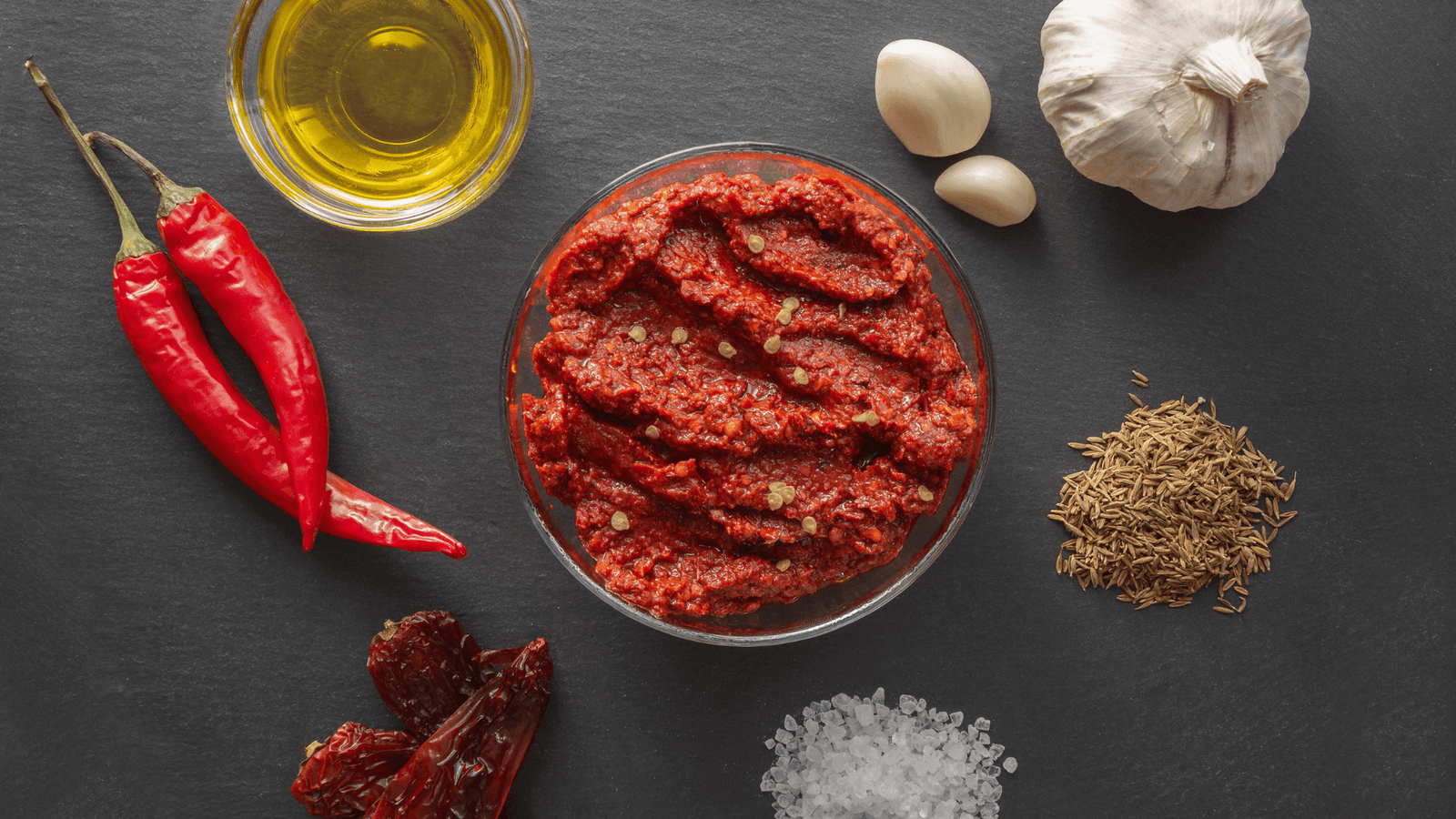
Harissa is Tunisia’s national condiment, a thick, deeply flavoured chili paste made from sun-dried red peppers, garlic, olive oil, and a small set of spices: caraway, coriander, and salt at its most traditional. Some regional versions add cumin or a touch of lemon juice, but the soul of the paste stays the same across every Tunisian household and producer.
It is not just a hot sauce. Harissa is simultaneously a condiment, a cooking ingredient, and a marinade. In Tunisia, it’s eaten daily, spread on bread, stirred into soups and stews, used as a base for couscous dishes, and served alongside grilled meats and fish.
Harissa is made with sun-dried hot peppers, freshly prepared spices, and olive oil, which preserves it and slightly reduces its spiciness. That combination is what makes it so versatile: the olive oil rounds the heat, the spices add depth, and the result is something that enhances a dish rather than just burning through it.
In December 2022, UNESCO did something that put harissa on the global cultural map: harissa was inscribed on the Representative List of the Intangible Cultural Heritage of Humanity, recognised as an integral part of domestic provisions and the daily culinary and food traditions of Tunisian society.
It sits on that list alongside French baguettes, Ukrainian borscht, and Cuban rum traditions that represent not just food, but identity.
Already popular in North Africa and France, this condiment is gaining popularity worldwide, from the United States to China, where it is considered the North African cousin of sriracha.
For chefs and food buyers, UNESCO recognition isn’t just a story to tell on a menu; it’s a signal that this ingredient has cultural depth, global credibility, and long-term staying power. This isn’t a passing trend.
The UAE’s food scene in 2026 is moving in a clear direction: away from spectacle and toward ingredients that have real character. The message coming from UAE chefs and restaurateurs is strikingly aligned: less noise, more meaning, with flavours allowed to speak for themselves.
Harissa fits that shift perfectly. It’s not a gimmick. It’s not fusion for the sake of it. It’s a centuries-old paste with a specific flavour profile that works across multiple cuisines, and the UAE’s cosmopolitan, flavour-forward dining scene is exactly the right environment for it.
There’s also a practical reason. Dubai’s restaurant market is intensely competitive. Chefs are constantly looking for ingredients that differentiate their menus without requiring complex techniques. Harissa is that ingredient: one jar, dozens of applications, immediate flavour impact.
Add to that the UAE’s large North African and Arab diaspora community, for whom harissa is a familiar comfort, and you have an ingredient with broad appeal across multiple customer segments.
Tunisian Harissa is one of the most versatile condiments a professional kitchen can stock. Here’s how it’s being used across UAE restaurants and food businesses right now:
As a marinade: rubbed onto chicken, lamb, or fish before grilling. The oil in the paste keeps the meat moist, while the spices form a flavoured crust. It’s become a go-to for shawarma and grilled protein concepts.
As a sauce base: stirred into tomato sauces, used as the starting point for stews, or thinned with Tunisian olive oil and lemon for a dipping sauce. A spoonful transforms a basic pasta or grain bowl into something with real character.
As a condiment at the table: served alongside bread, mezze, or as an alternative to conventional hot sauce, increasingly appearing in burger restaurants, brunch menus, and gourmet grocery retail.
As a glaze: mixed with honey or pomegranate molasses for a sweet-heat finish on roasted vegetables, wings, or cauliflower dishes. This version resonates strongly with plant-based and health-focused menus.
As a spread: on sandwiches, wraps, and flatbreads. Its thick paste consistency means it clings rather than drips, making it practical for grab-and-go formats.
Not all harissa is the same. The quality gap between industrial products and properly made traditional harissa is significant, and your customers will notice.
The best harissa is made with a short, clean ingredient list: dried chili peppers, garlic, olive oil, caraway, coriander, and salt. If you see heavy tomato paste, excessive preservatives or unfamiliar flavours, it may be a less traditional variant.
Tunisian harissa, specifically sourced from the Cap Bon region in northeast Tunisia, where chili cultivation has deep roots, tends to have a more balanced, aromatic profile than versions produced elsewhere. The olive oil used in traditional production also plays a role: good olive oil carries and mellows the heat in a way that vegetable oils cannot.
For wholesale and HoReCa buyers, sourcing directly from a Tunisian producer or distributor is the most reliable way to get consistent quality, authentic flavour, and full traceability. This is especially important as harissa becomes more mainstream and lower-quality imitations fill retail shelves.
KB Agriculture sources and distributes authentic Tunisian harissa directly from Tunisia, where our production and sourcing operations are based. Our harissa is made with traditional ingredients, no unnecessary additives, and the same premium Tunisian olive oil that defines the quality of everything we supply.
Whether you’re a restaurant group, a specialty retailer, or a food manufacturer looking to add harissa to your product range, we supply in formats suited to professional and wholesale needs, from catering-size jars to bulk supply and private label options.
If you’re already working with Mediterranean ingredients in the GCC, harissa is a natural addition to your portfolio.
Harissa isn’t new. In Tunisia, it’s been on the table for centuries. What’s new is that the rest of the world, including the UAE’s restaurant scene, is finally catching up with what Tunisians have always known: that a well-made chili paste with the right spices and good olive oil is one of the most useful, flavourful, and versatile things you can put in a professional kitchen.
The chefs and buyers who are getting ahead of this curve now will be the ones with the most credible story to tell when harissa is everywhere.
Looking to source authentic Tunisian harissa for your restaurant, hotel, or food business in the UAE? Contact KB Agriculture, we supply wholesale from Tunisia to distributors and buyers across the GCC.
+971 50 194 5270
Isis Building, Office 2, Mezzanine, Ennasr 1 Ariana, Tunisie
