
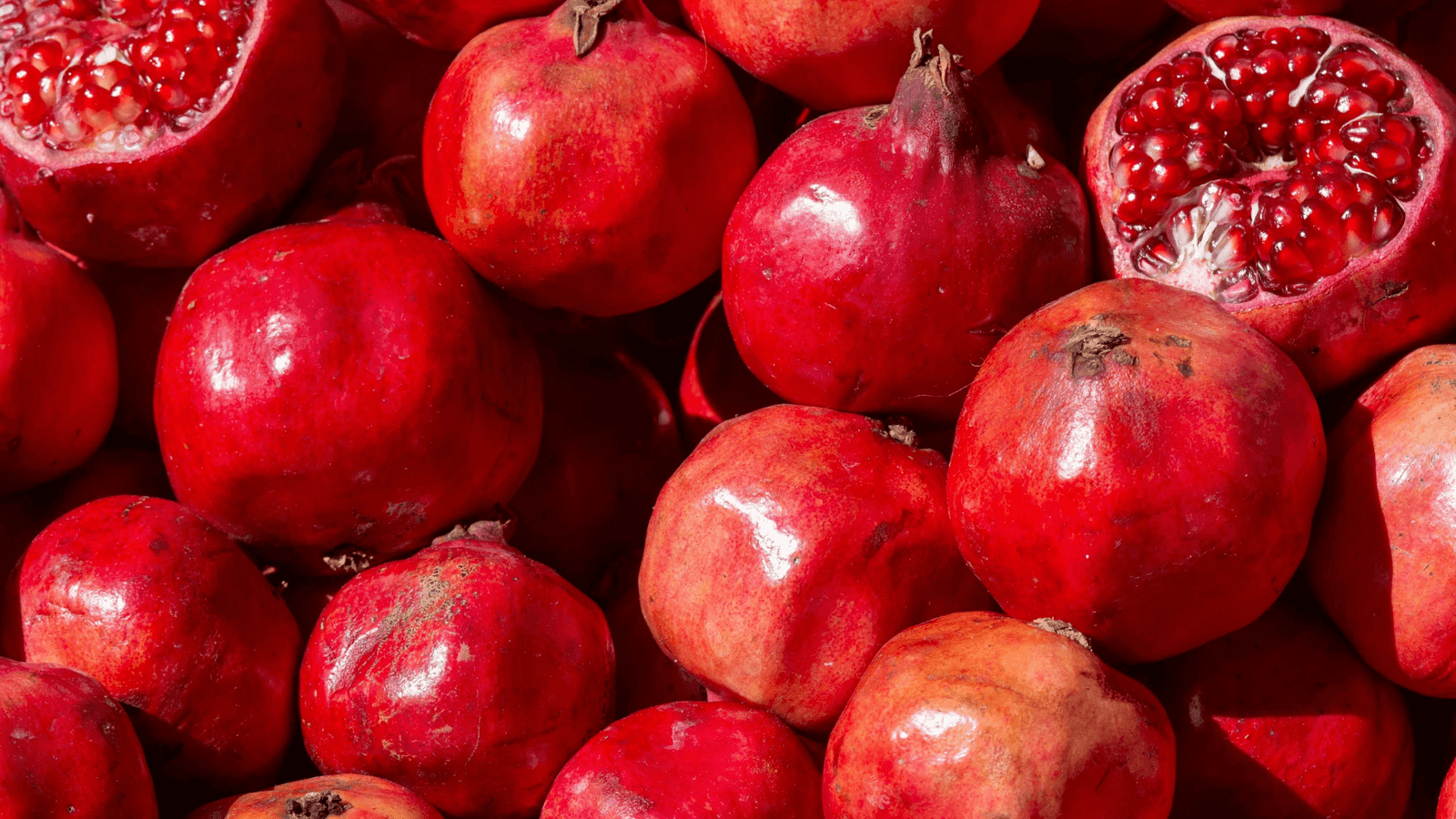
Quick answer: Tunisian pomegranate season runs from mid-September to December. The harvest starts in the southern oases of Gabès, then moves north to Testour about a month later. The two best-known export varieties are Gabsi (large, very sweet) and Tounsi (medium, deep red). For UAE and GCC buyers, October and November are the main sourcing window.
Pomegranates are the fruit of the Tunisian autumn. They appear in markets as the summer heat breaks and arrive in Gulf supermarkets, hotel kitchens, and juice bars just as demand for fresh, premium fruit picks up. If you buy fresh fruit for retail or food service, knowing when the season starts, which varieties to ask for, and what to check before you order will save you time and costly mistakes.
The season starts in mid-September in the oasis region of Gabès, in the south, where the earliest fruit ripens. Production in Testour, in the north, starts about a month later, around mid-October. Late-ripening varieties then carry the season into December.
| Period | What to expect |
|---|---|
| Mid-September | First Gabsi fruit from Gabès |
| October | Peak volumes begin as northern production comes online |
| November | Full season, with Testour famous for its pomegranate festival around this time |
| December | Late-ripening varieties close the season |
Exact timing shifts a little each year with weather and growing conditions, so always confirm the current harvest window with your supplier before planning a first shipment.
Two regions define Tunisian pomegranates:
Pomegranates are also grown in other regions, including Kairouan and Cap Bon.
| Gabsi | Tounsi | |
|---|---|---|
| Main area | Gabès (south-east) | Testour (north-west) |
| Harvest starts | Mid-September | Mid-October |
| Fruit size | Large | Medium |
| Skin | Red, often with a greenish blush | Red |
| Arils (seeds) | Red, very sugary, abundant juice | Dark red, sugary, abundant juice |
Gabsi is the most widely planted variety and the one most often exported. Some exporters also offer Jebali, a medium-to-large, bright red variety. If you are buying for a specific use, such as juicing, gifting, or retail display, ask your supplier which variety they are quoting and when it was harvested.
Pomegranates have a strong place in Middle Eastern cooking and are also a menu favorite for salads, garnishes, and juices. For the wider picture on what GCC buyers are sourcing, read our guide to Mediterranean fruits in demand across the UAE and GCC.
Before you place an order, confirm these points with your supplier:
Good pomegranates feel heavy for their size, with firm, unblemished skin and a deep, even color. Avoid fruit with splits, soft spots, or dried-out skin. Variety matters here too: a Gabsi may show some green on the skin and still be fully ripe, so judge ripeness by weight, firmness, and the supplier’s harvest information rather than color alone.
Pomegranates keep well when handled correctly. They are typically stored cool, at around 5–7°C with high humidity, and kept away from heat sources and direct light. Handle the fruit gently, because bruising can lead to rot even when the skin looks fine. Rotate stock first in, first out, and match order volumes to your real sell-through so fruit does not sit in storage.
KB Agriculture sources fresh Mediterranean fruit directly from certified farms in Tunisia and across the Mediterranean basin, with documentation and export-ready packaging, and logistics coordinated from our Dubai office. Pomegranates are part of our fresh produce range, which is also available under our Fresh Mediterranean brand. See all our brands on our Our Brands page and our full fresh produce range.
If you also buy vegetables, our guide to the top Mediterranean vegetables in demand across the GCC can help you build one complete fresh category with a single supplier.
The season runs from mid-September to December. Gabès in the south ripens first, Testour in the north follows about a month later, and late-ripening varieties extend the season into December.
Gabsi and Tounsi are the best-known export varieties. Gabsi is large and very sweet with red arils, while Tounsi is medium-sized with dark red arils. Jebali is another variety offered by some exporters.
The main production areas are the oases of Gabès in the south-east and Testour in the north-west. Other regions, including Kairouan and Cap Bon, also grow pomegranates.
Most major UAE retailers and hotel groups require GlobalG.A.P. certification as a baseline. UAE and GCC customs also require a valid phytosanitary certificate for fresh fruit imports.
Store them in a cool place, typically around 5–7°C with high humidity, away from heat and direct light. Handle them gently to avoid bruising, and rotate stock first in, first out.
Whether you supply retail chains, hotels, or juice and food service operators, KB Agriculture connects you directly to Tunisian fruit with full documentation and a team that understands the Gulf market. Contact our Dubai office to request availability, pricing, and formats for the current season.
+971 50 194 5270
Isis Building, Office 2, Mezzanine, Ennasr 1 Ariana, Tunisie
