
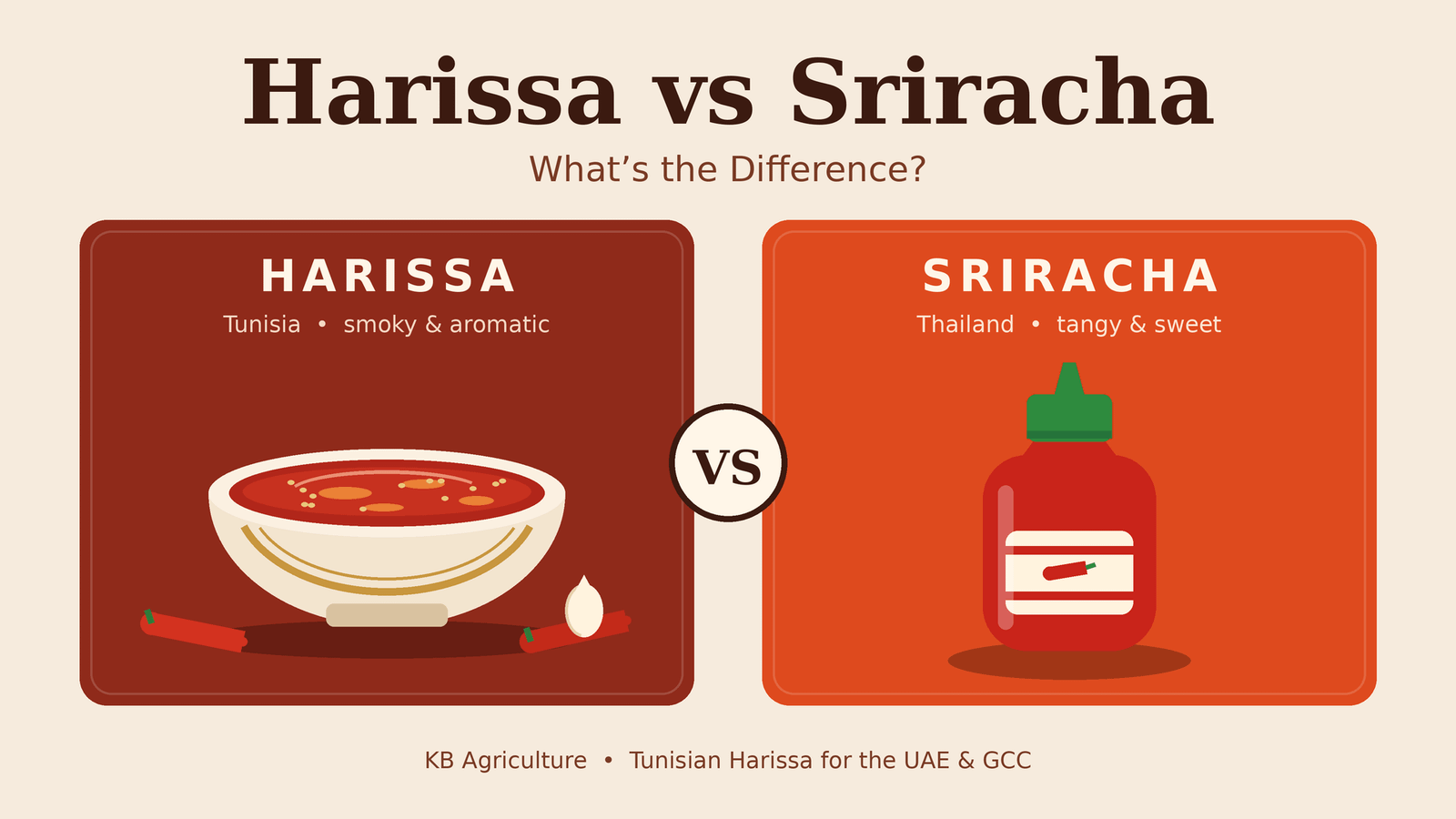
Quick answer: Harissa is a North African chili paste from Tunisia, made from red peppers, garlic, olive oil, and spices such as caraway and coriander. Sriracha is a Thai-style chili sauce made from chili, garlic, vinegar, sugar, and salt. Harissa is smoky, earthy, and aromatic. Sriracha is tangy, sweet, and garlicky. Harissa’s heat varies widely by recipe, while sriracha typically ranges from 1,000 to 2,500 Scoville heat units.
Harissa is often called “the North African sriracha,” and it is easy to see why. Both are red, both are thick, and both turn up on everything from eggs to burgers. But the comparison only goes so far. They come from different food cultures, use different ingredients, and behave differently in the kitchen. Here is how to tell them apart and when to use each.
Harissa is Tunisia’s national condiment, a thick chili paste made from dried or roasted red peppers, garlic, olive oil, and a small set of spices. Caraway, coriander, and salt define the traditional recipe, and some versions add cumin or a little lemon juice.
It is far more than a hot sauce. In Tunisia, harissa is a condiment, a cooking ingredient, and a marinade at the same time, spread on bread, stirred into stews and couscous, and served with grilled meat and fish. In December 2022, UNESCO inscribed harissa on its Representative List of the Intangible Cultural Heritage of Humanity. You can read more in our guide on why Tunisian harissa is taking over UAE restaurant menus.
Sriracha is a chili sauce named after the coastal Thai city of Si Racha. The classic recipe blends red chili peppers with garlic, distilled vinegar, sugar, and salt. The result is thick but pourable, with a tangy, slightly sweet, garlicky flavor. Its sugar content is often compared to that of ketchup. It is typically used as a table sauce and dipping sauce across Southeast Asian cooking, and it is now a staple worldwide.
| Harissa | Sriracha | |
|---|---|---|
| Origin | Tunisia / North Africa | Thailand |
| Main ingredients | Red peppers, garlic, olive oil, caraway, coriander | Red chili, garlic, vinegar, sugar, salt |
| Flavor | Smoky, earthy, aromatic, slightly sweet | Tangy, sweet, garlicky |
| Heat | Varies by pepper and recipe | Typically 1,000–2,500 SHU |
| Texture | Thick paste | Thick, pourable sauce |
| Fat base | Olive oil | None |
| Best for | Marinades, glazes, stews, spreads | Dipping, drizzling, quick heat |
There is no single answer, because harissa does not have one standard heat level. It depends on the peppers used. Some harissa is mild and smoky, while hotter versions can be noticeably stronger than sriracha, which stays in a consistent moderate range. If heat matters to you or your customers, check the label or ask your supplier for the heat level and pepper variety.
In a pinch, yes, but the flavor will change. Swapping harissa for sriracha adds smokiness and spice depth but loses the sweet, tangy punch. Swapping sriracha for harissa does the opposite: you get sweetness and tang, but lose the earthy, aromatic character. For dishes where flavor is the point, such as a marinade or a stew, harissa is the better choice. For a quick drizzle over noodles or eggs, sriracha is the easier fit.
Harissa works best as:
Sriracha works best as:
UAE diners and chefs are moving toward ingredients with real origin and character, and harissa fits that shift. It carries UNESCO recognition, a short ingredient list, and a flavor that works across Mediterranean, Arab, and international menus. It also feels familiar to the UAE’s large North African and Arab communities while being new to many other diners. For the bigger market picture, read why spicy food is booming in the UAE.
Not all harissa is made equally. Look for a short, clean ingredient list: chili peppers, garlic, olive oil, caraway, coriander, and salt. Heavy tomato paste, excess preservatives, or unfamiliar flavorings usually point to a less traditional product. Olive oil quality matters too, since good oil carries and rounds the heat in a way vegetable oils cannot. Our guide to Tunisian organic olive oil explains why Tunisian oil is a natural partner for harissa.
KB Agriculture supplies authentic Tunisian harissa from Tunisia to restaurants, hotels, retailers, and distributors across the UAE and GCC, including under our DOCCANA brand and as private label. See our harissa and spicy product range and learn more about our brands on the Our Brands page.
Harissa is a Tunisian chili paste made from red peppers, garlic, olive oil, and spices like caraway and coriander. Sriracha is a Thai-style chili sauce made from chili, garlic, vinegar, sugar, and salt. Harissa tastes smoky and earthy, while sriracha is tangy and sweet.
It depends on the recipe. Sriracha typically measures around 1,000 to 2,500 Scoville heat units. Harissa varies widely by pepper type, and hotter versions can be stronger than sriracha.
No. They come from different cuisines and use different ingredients. Harissa is an olive oil-based paste with warm spices, while sriracha is a vinegar-and-sugar-based sauce.
Yes, in many dishes, but it will taste smokier and less sweet. Harissa works especially well in marinades, stews, and glazes.
Traditional harissa is made from dried or roasted red chili peppers, garlic, olive oil, caraway, coriander, and salt. Some recipes add cumin or lemon juice.
Looking to add harissa to your menu, retail range, or private label line? Get in touch with KB Agriculture to discuss supply, formats, and samples.
+971 50 194 5270
Isis Building, Office 2, Mezzanine, Ennasr 1 Ariana, Tunisie
